Beauty of Indian Forest

Buxa Tiger Reserve Landscape, Duaars West Bengal
Sunday, December 5, 2010


Wednesday, November 17, 2010
Study on Indian Wetlands #6
Importance of wetlands :
“Civilization began around wetlands; today's civilization has every reason to leave them wet and wild.” - Edward
Most of the major civilizations of the world have evolved from river valleys and their flood plains. These wetlands have supported the growth of the civilization in various ways ranging from agriculture to transport.
1. Wetlands play a vital role in maintaining the delicate ecological balance. They support a wide range of flora and fauna. Waterfowl rely on wetlands for reproduction and shelter during the different life stages. Shorebirds, geese and ducks use wetlands as resting places during their long migrations.


2. Wetlands also help prevent flooding. Many wetlands are associated with the floodplains surrounding rivers. When these rivers swell in times of heavy rainfall or spring runoff, the wetlands store excess water which is gradually transferred to groundwater reserves rather than flowing overland.

3. Wetlands store excess water and replenish local groundwater supplies. When water reaches the aquifer, it is cleaner than when it entered the wetland because it has been filtered through tiny spaces in the overlying rock. Sediment is often a major pollutant in aquatic systems. Wetlands filter out sediment and decomposing plant matter from water Wetlands reduce sediment by serving as pools where sediment can settle.
4.Wetlands are used for fishing, hunting, boating, bird watching and other forms of outdoor recreation. At one time, wetlands were seen as waste lands because they were too "dirty" to swim in or too shallow for large boats. As people become more appreciative of nature, wetlands continue to become valuable recreational areas.


Importance of wetlands :
5.Tampering with wetlands has also threatened the lives of thousands of people through increased flooding, droughts, and water contamination. Some existing wetlands have been enhanced yet attempts at re-creation have failed. Wetlands are highly dynamic and a change in water level or rainfall can change plant and animal populations.

“Civilization began around wetlands; today's civilization has every reason to leave them wet and wild.” - Edward
Most of the major civilizations of the world have evolved from river valleys and their flood plains. These wetlands have supported the growth of the civilization in various ways ranging from agriculture to transport.
1. Wetlands play a vital role in maintaining the delicate ecological balance. They support a wide range of flora and fauna. Waterfowl rely on wetlands for reproduction and shelter during the different life stages. Shorebirds, geese and ducks use wetlands as resting places during their long migrations.

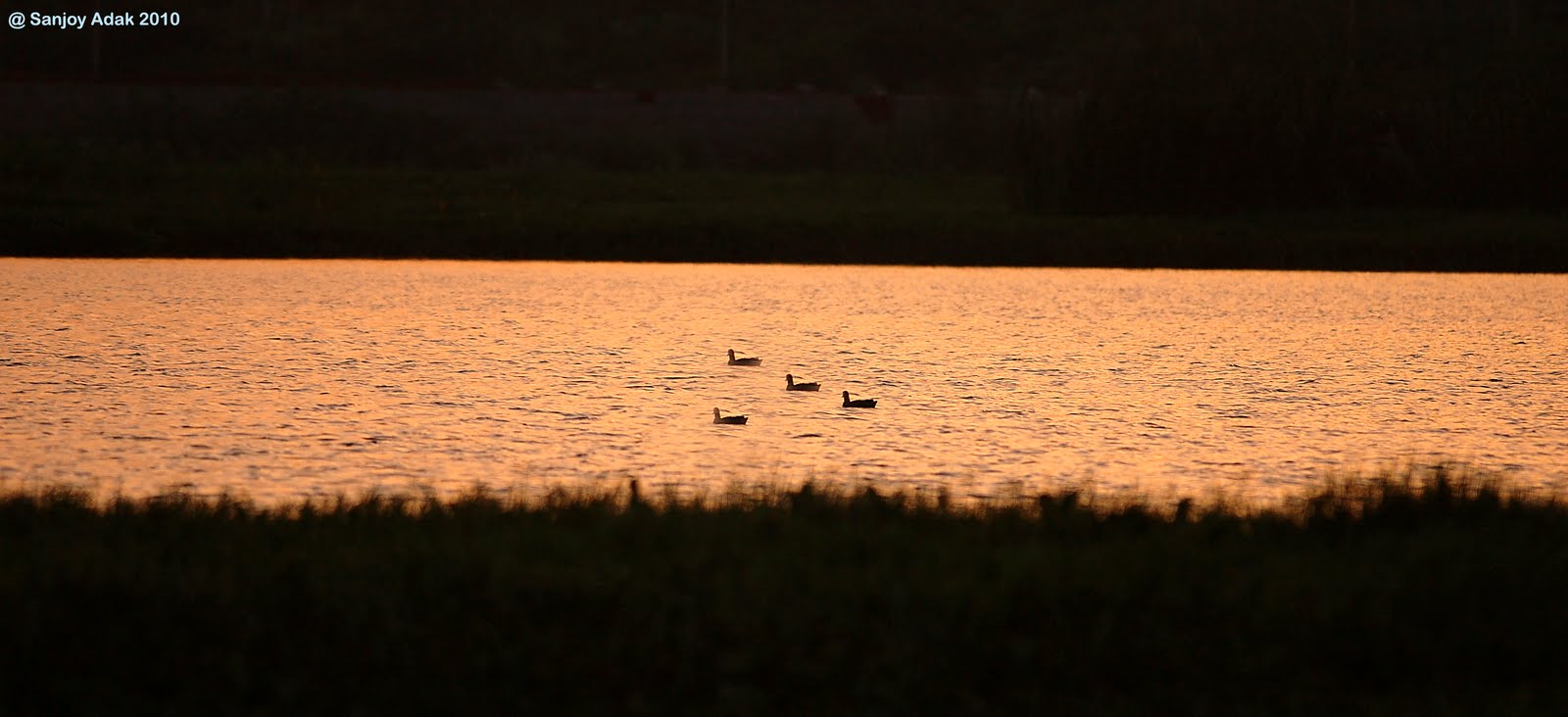
2. Wetlands also help prevent flooding. Many wetlands are associated with the floodplains surrounding rivers. When these rivers swell in times of heavy rainfall or spring runoff, the wetlands store excess water which is gradually transferred to groundwater reserves rather than flowing overland.

3. Wetlands store excess water and replenish local groundwater supplies. When water reaches the aquifer, it is cleaner than when it entered the wetland because it has been filtered through tiny spaces in the overlying rock. Sediment is often a major pollutant in aquatic systems. Wetlands filter out sediment and decomposing plant matter from water Wetlands reduce sediment by serving as pools where sediment can settle.
4.Wetlands are used for fishing, hunting, boating, bird watching and other forms of outdoor recreation. At one time, wetlands were seen as waste lands because they were too "dirty" to swim in or too shallow for large boats. As people become more appreciative of nature, wetlands continue to become valuable recreational areas.


Importance of wetlands :
5.Tampering with wetlands has also threatened the lives of thousands of people through increased flooding, droughts, and water contamination. Some existing wetlands have been enhanced yet attempts at re-creation have failed. Wetlands are highly dynamic and a change in water level or rainfall can change plant and animal populations.

Saturday, September 11, 2010
Other Than Wetlan #3
Last friday was a good sunny day after a long time in Bangalore. I visited back side of Banerghatta open forest (Shivanahalli) and got some Green Bee Eater. Here some zoological information on Bee Eater.

Green bee-eaters also reach in color like other Bee Eaters. It is about 9 inches (16–18 cm) long with about 2 inches made up by the elongated central tail-feathers. The sexes are not visually distinguishable. The entire plumage is bright green and tinged with blue especially on the chin and throat. The crown and upper back are tinged with golden rufous. The flight feathers are rufous washed with green and tipped with blackish. A fine black line runs in front of and behind the eye. The iris is crimson and the bill is black while the legs are dark grey. The feet are weak with the three toes joined at the base. The wings are green and the beak is black. The elongated tail feathers are absent in juveniles.
+copy.jpg)
Both the above image taken with camera: Camera: Nikon D70s Lens: Nikkor 300/F4 IF-ED AF-S + 14E-II TC with Manfrotto Camera support.

Green bee-eaters also reach in color like other Bee Eaters. It is about 9 inches (16–18 cm) long with about 2 inches made up by the elongated central tail-feathers. The sexes are not visually distinguishable. The entire plumage is bright green and tinged with blue especially on the chin and throat. The crown and upper back are tinged with golden rufous. The flight feathers are rufous washed with green and tipped with blackish. A fine black line runs in front of and behind the eye. The iris is crimson and the bill is black while the legs are dark grey. The feet are weak with the three toes joined at the base. The wings are green and the beak is black. The elongated tail feathers are absent in juveniles.
+copy.jpg)
Both the above image taken with camera: Camera: Nikon D70s Lens: Nikkor 300/F4 IF-ED AF-S + 14E-II TC with Manfrotto Camera support.
Saturday, September 4, 2010
Other than Wetlan #2
The Cattle Egret (Bubulcus ibis) is a cosmopolitan species of heron (family Ardeidae) found in the tropics, subtropics and warm temperate zones. Despite the similarities in plumage to the egrets of the genus Egretta, it is more closely related to the herons of Ardea.
It is a stocky white bird adorned with buff plumes in the breeding season which nests in colonies, usually near bodies of water and often with other wading birds. it feeds in relatively dry grassy habitats, often accompanying cattle or other large mammals, since it catches insect and small vertebrate prey disturbed by these animals. During monsoon seasons this breeding plumage adult looks relatively fantastic. We were always amazed by the transformation birds undergoes during the breeding season. This post is all about one such extraordinary transformation.
Camera: Nikon D70s Lens: Nikkor 300/F4 IF-ED AF-S + 14E-II TC with Manfrotto Camera support.

Scaly breasted Munia is very common in Wetland. This small beauty is very naughty and difficult to shoot, somehow I manage one decent shot.

It is a stocky white bird adorned with buff plumes in the breeding season which nests in colonies, usually near bodies of water and often with other wading birds. it feeds in relatively dry grassy habitats, often accompanying cattle or other large mammals, since it catches insect and small vertebrate prey disturbed by these animals. During monsoon seasons this breeding plumage adult looks relatively fantastic. We were always amazed by the transformation birds undergoes during the breeding season. This post is all about one such extraordinary transformation.
Camera: Nikon D70s Lens: Nikkor 300/F4 IF-ED AF-S + 14E-II TC with Manfrotto Camera support.

Scaly breasted Munia is very common in Wetland. This small beauty is very naughty and difficult to shoot, somehow I manage one decent shot.

Saturday, August 28, 2010
Other than wetland #1
Last weekend I visited Ranganathittu after a long time. It was very cloudy and bad weather. Still I could able to manage some o.k-o.k shot that I want to share with you. Here you go .....

This very busy small stripped squirrel I found in early morning light. camera: Nikon d70s Lens: Nikkor 300/F4 IF-ED AF -S +14e-II TC with Manfrotto camera support.

Black head Ibis is very common in Ranganathittu, basically they are all seasons resident at there. The flying Ibis really a nice object to shoot. Camera: Nikon d70s Lens: Nikkor 300/F4 IF-ED AF -S +14e-II TC with Manfrotto camera support.

Pheasant Tailed Jacana is one of the beautiful bird in wetland. This beauty I found in Channapatna Wetland on Mysore Road. I'm very glad to say people/corporation has the initiative to conserve the wetland and I found variety of water birds. I do visit this wetland another time and post the report. The Pheasant-tailed Jacana (Hydrophasianus chirurgus) is a jacana in the monotypic genus Hydrophasianus. Jacanas are a group of waders in the family Jacanidae that are identifiable by their huge feet and claws which enable them to walk on floating vegetation in shallow lakes, their preferred habitat. The Pheasant-tailed Jacana is capable of swimming, although it usually walks on the vegetation. The females are more colourful than the males and are polyandrous.Camera: Nikon d70s Lens: Nikkor 300/F4 IF-ED AF -S +14e-II TC with Manfrotto camera support.

This very busy small stripped squirrel I found in early morning light. camera: Nikon d70s Lens: Nikkor 300/F4 IF-ED AF -S +14e-II TC with Manfrotto camera support.

Black head Ibis is very common in Ranganathittu, basically they are all seasons resident at there. The flying Ibis really a nice object to shoot. Camera: Nikon d70s Lens: Nikkor 300/F4 IF-ED AF -S +14e-II TC with Manfrotto camera support.

Pheasant Tailed Jacana is one of the beautiful bird in wetland. This beauty I found in Channapatna Wetland on Mysore Road. I'm very glad to say people/corporation has the initiative to conserve the wetland and I found variety of water birds. I do visit this wetland another time and post the report. The Pheasant-tailed Jacana (Hydrophasianus chirurgus) is a jacana in the monotypic genus Hydrophasianus. Jacanas are a group of waders in the family Jacanidae that are identifiable by their huge feet and claws which enable them to walk on floating vegetation in shallow lakes, their preferred habitat. The Pheasant-tailed Jacana is capable of swimming, although it usually walks on the vegetation. The females are more colourful than the males and are polyandrous.Camera: Nikon d70s Lens: Nikkor 300/F4 IF-ED AF -S +14e-II TC with Manfrotto camera support.
Saturday, August 21, 2010
Other than Wetlands
Dear Friends,
Due to some family issue, I'm not able to continue my posting on wetland. So I decide to post some of my recent wildlife image here. Here you go & hope you'll enjoy my work.

This is image of Brahminy Kite, Taken from Bangalore. Camera: Nikon D70s, Lens: Nikkor 300/F4 IF-ED AF-S +14E-II TC

This is image of Jerdons Bush Lark, Taken from Vally School,Bangalore. Camera: Nikon D70s, Lens: Nikkor 300/F4 IF-ED AF-S +14E-II TC

This is image of Sopt Bill Palican, Taken from Banerghatta NP,Bangalore. Camera: Nikon D70s, Lens: Nikkor 300/F4 IF-ED AF-S +14E-II TC
Due to some family issue, I'm not able to continue my posting on wetland. So I decide to post some of my recent wildlife image here. Here you go & hope you'll enjoy my work.

This is image of Brahminy Kite, Taken from Bangalore. Camera: Nikon D70s, Lens: Nikkor 300/F4 IF-ED AF-S +14E-II TC

This is image of Jerdons Bush Lark, Taken from Vally School,Bangalore. Camera: Nikon D70s, Lens: Nikkor 300/F4 IF-ED AF-S +14E-II TC

This is image of Sopt Bill Palican, Taken from Banerghatta NP,Bangalore. Camera: Nikon D70s, Lens: Nikkor 300/F4 IF-ED AF-S +14E-II TC
Saturday, June 12, 2010
Study on Indian Wetlands #5
King Fisher, This is the most beautiful bird found and well spread across the all Wetlands. I can remember in my childhood whenever we used to see a kingfisher, we used to say "look kingfisher, make a wish". Still today king fisher is my lucky bird and I wish to click this beauty again and again. Everybody knows they are really deadly predator in Wetland. It is very pleasant experience to watch the fishing style and capabilities of this bird. Here some image of Pied king fisher and small blue king fisher.

I have taken this above image of small blue kingfisher from a river side wetland of kauvery river, Bhimeswari, Karnataka. Gear used: Nikon d70s, Sigma-170-500mm/F5

This Image from Lake of Kodai,Tamilnadu. Gear used: Nikon d70s, Sigma-170-500mm/F5
There are roughly 90 species of kingfisher in the world. All have large heads, long, sharp, pointed bills, short legs, and stubby tails. Most species have bright plumage with little differences between the sexes. Most species are tropical in distribution, and a slight majority are found only in forests. Among the 90 species there are only (as per my knowledge) 7 species found in India.
a) white brested kingfisher
b) Small blue king fisher
c) Pied Kingfisher
d) Strok billed kingfisher
e) Crested Kingfisher
f) Oriental Dwarf Kingfisher
g) Black headed Kingfisher
I appreciate your help to inform me about any new species apart my knowledge.

This above image of Pied Kingfisher taken from Ranganathittu,Karnakata.
Gear used:Nikon d70s, Sigma-170-500mm/F5
Study of Wetland .....continue

I have taken this above image of small blue kingfisher from a river side wetland of kauvery river, Bhimeswari, Karnataka. Gear used: Nikon d70s, Sigma-170-500mm/F5

This Image from Lake of Kodai,Tamilnadu. Gear used: Nikon d70s, Sigma-170-500mm/F5
There are roughly 90 species of kingfisher in the world. All have large heads, long, sharp, pointed bills, short legs, and stubby tails. Most species have bright plumage with little differences between the sexes. Most species are tropical in distribution, and a slight majority are found only in forests. Among the 90 species there are only (as per my knowledge) 7 species found in India.
a) white brested kingfisher
b) Small blue king fisher
c) Pied Kingfisher
d) Strok billed kingfisher
e) Crested Kingfisher
f) Oriental Dwarf Kingfisher
g) Black headed Kingfisher
I appreciate your help to inform me about any new species apart my knowledge.

This above image of Pied Kingfisher taken from Ranganathittu,Karnakata.
Gear used:Nikon d70s, Sigma-170-500mm/F5
Study of Wetland .....continue
Friday, June 4, 2010
Study on Indian Wetlands #4
From my last post, I'm not posting any text information about wetland. Apart from my study and knowledge about Wetland, I'm trying to furnish this blog with more rich information, so I'm studying. Please wait a little while and till then enjoy some image from wetland of Karnataka.

The above Spot Billed Palican is not native resident of Wetland but I have seen so many Pelican in adjacent wetlands of Kaveri River. This image I have taken from Kokrabelur.Gear used: Nikon D70s, Nikkor 300/F4 IF-ED+14EII TC
Indian Wetlands.....continue

The above Spot Billed Palican is not native resident of Wetland but I have seen so many Pelican in adjacent wetlands of Kaveri River. This image I have taken from Kokrabelur.Gear used: Nikon D70s, Nikkor 300/F4 IF-ED+14EII TC
Indian Wetlands.....continue
Wednesday, June 2, 2010
Study on Indian Wetlands #3
Dear friends, After some boring Gyan here some wild life image for you in today's post. Hope you enjoy.

The above image of purple shwamphen, I made from one unknown wetlands on the way to my office(BTM to electronics City)Purple Shwamphen is one of the colourful and beautiful specis from Wetland habitat. Especially I like this water bird for its blue colour. I posted this image in www.indianaturewatch.net as the name "birds in blue".
Gear used: Nikon d70s with Nikkor 300/F4 IF-ED AF-S+14EII TC

Another image of spot billed ducks from the same Wetland.
Gear used: Nikon d70s with Nikkor 300/F4 IF-ED AF-S+14EII TC
Indian Wetlands.....continue.

The above image of purple shwamphen, I made from one unknown wetlands on the way to my office(BTM to electronics City)Purple Shwamphen is one of the colourful and beautiful specis from Wetland habitat. Especially I like this water bird for its blue colour. I posted this image in www.indianaturewatch.net as the name "birds in blue".
Gear used: Nikon d70s with Nikkor 300/F4 IF-ED AF-S+14EII TC

Another image of spot billed ducks from the same Wetland.
Gear used: Nikon d70s with Nikkor 300/F4 IF-ED AF-S+14EII TC
Indian Wetlands.....continue.
Tuesday, June 1, 2010
Study on Indian Wetlands #2

Above image taken from One of the unknow wetland of my Native place, Naitahi. Northan Pin tail ducks, one of the beautiful specis of Wetland. I used my old boy gear Minolta Z20 30-290mm inbuilt lens.
Some Gyan about Wetland.
Type of Wetland:
The term ‘Wetlands’ is broadly used to refer to swamps, marshes, bogs, prairie potholes, flood plains, and fen. These are lands which due to geological or ecological factors, have a natural supply of water—either from tidal flows, flooding rivers, connections with groundwater, or because they lie above aquifers or potholes.
Marshes: A freshwater marsh is an inland area inundated with anywhere between 1- 6 feet of water, containing a variety of grasses, flowers and bushes, rather than trees, unlike as in swamps.
They have an interesting mix of plant and animal life and are home to yellow-headed and red-winged blackbirds, herons, egrets, rails, bitterns, moorhens, ducks and geese.
Marshes also host frogs, turtles, snakes, salamanders, a diverse variety of insects, including aquatic, flying, and grazing insects.
Marshes that occur along rivers are called riparian marshes. These marshes serve two ecological roles: to absorb excess water when river levels are high and to release water when the river levels are low. These balancing forces help prevent floods and droughts.

Above image taken from Buxa Tiger reserve, near to Bala River. I thing this image can be good example of swamps.
Swamps: Swamps are slow moving streams, rivers or isolated depressions that host trees and some shrubs. A bog is a peat-accumulating wetland. Some shrubs and evergreens grow in bogs, as does moss. Most water comes from precipitation. There is usually no direct inflow or outflow of water.

Above image taken from Bhimeswari Fishing Camp, Karnataka. Good example of Prairie Pothols
Prairie potholes: Prairie potholes are shallow or bowl-like depressions have variable wetness. They are often used as breeding grounds by birds. They are not wet year-round.
Indian Wetlands.....continue
Friday, May 28, 2010
Study on Indian Wetlands #1

2nd post on Wet lands. This image of Oriental Darter, I have taken from Ranganathittu B.S with Nikon D70s/Sigma 170-500mm. India Oriental Darter also called Snake bird.
Why I'm writing bolgs on Wetland: My goal is to create a mass awareness on Wetland with my image and little knowledge. I believe, Wetlands are most neglected and most threatened ecological environment, becoz it is not at all protected as National park in India and in many cases it is private property. I do believe wetlands are also Mather of beautiful biodiversity and should not be destroyed to keep our earth green. There are lots of initiatives to protect TIGER and their habitat but very few noises to protect Wetland. So I would like to show and make you aware about the beauty and mistry of wetland by my little photographic skill. Hope you enjoy my photograph and also think about the khazana of biodiversity.
I'll try to put as much as possible generic information about wetland from my next post and also demand your comments, critic and valuable inputs about it.
Let us do something to protect wetland.
One small Q to all --> Name the biggest wetlands of India. Answare in next post. ;-)
Wetlands of India ......continue
Thursday, May 27, 2010
Study on Indian Wetlands

This is my 1st post on Wetlands. This shot taken from Kodai lake, Tamilnadu. The growing hotel business and construction eating up the surroundings nature and biodiversity at there.
I'll write my study on flora & fauna of Indian Wetland (presently from southern part of India) from my next post.
Study on Indian Wetlands.....continue
Subscribe to:
Posts (Atom)